
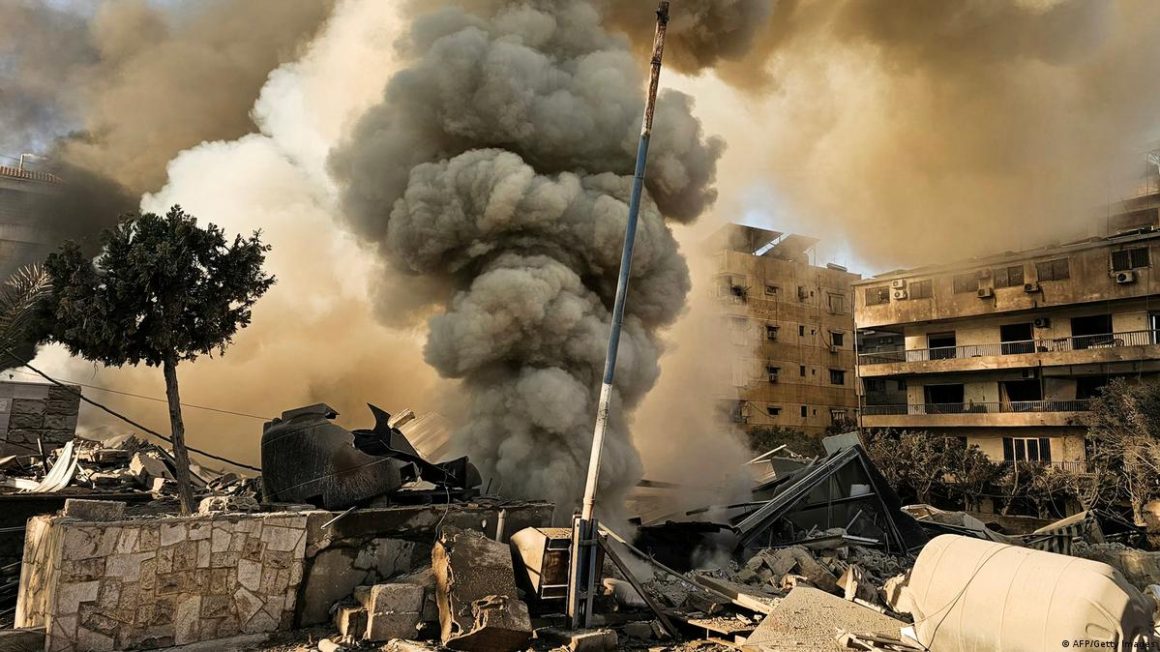

There is an increasing sense that the war in the Middle East is revealing more than a crisis in the regional order. The latest escalation, where the United States and Israel attacked Iran, which in turn attacked the Gulf states, is being considered not only for the various and immediate consequences. It is also illustrative of ongoing changes in entire international system.
The questions about the use of force or the existence of legal grounds may appear familiar. While these may be important questions, they are no longer the most revealing questions being asked.
The gradual shift is becoming harder to ignore. Not simply about whether rules exist, but whether and how they are being interpreted or simply being set aside.
Moments of legal ambiguity have been consistent in recent decades. Ukraine, Iraq and Libya all indicate situations where international law has been strained to its limits. Each case has been and should be debated on its own terms. Taken together, they suggest a pattern. Exceptions are increasingly becoming normalised. The line between rule and interpretation less clear.
All of this is not to say that international law has collapsed. Institutions continue to function and their norms and language remain intact. States still feel the need to justify their actions with each other and in the broader a legal framework. When looking closer, one sees that more subtle changes are underfoot. The system’s centre of gravity appears to be shifting. It is moving away from a clearly defined understanding of the various rules and norms. There is a clear movement toward a more fluid, politically contingent interpretation of these various rules and norms, respectively.
In this light we see that legitimacy begins to matter as much as legality. While in theory international law still applies equally to all states, in practice, the perceptions of fairness and conduct is increasingly uneven. Similar actions can be judged very differently from state to state. Regional and global powers have more space and willingness to pursue their own interests. Global South states have been raising these issues for many years. It is only now that they are being more widely acknowledged.
The consequence is not simply a matter of double standards. At its core, there lies a deeper erosion of confidence in the system itself. Rules only have power when states uphold them. When rules are seen to apply selectively, states will increasingly begin to reject these rules, which will lose their authority.
International institutions are key sites which reflect this tension. Courts continue to issue rulings, and the United Nations continue to pass resolutions, but their legitimacy is eroded when enforcement remains constrained. Increasingly this is experienced as an uncomfortable paradox. The system continues to exist as it has in the past, but it increasingly appears insufficient. It is hapless to ensure that norms are being consistently upheld. It is not like states have directly abandoned multilateralism. Rather, their engagement has simply become more contingent and selective. States pursue their own interests, in their own ways.
Institutions are supported when they align with national interests and simply bypassed when they do not. A more instrumental approach to the international order is gaining ground.
For countries in the Global South, this presents a confounding reality. While there is a more fluid system in which it can gain new alignments and greater agency, the unpredictability of the system limits its space to do so. The result is a more fragmented landscape. In such a situation coherence is harder to sustain.
While formal institutions remain important, accountability becomes more complex to ensure. Both formal institutions and actors in civil society and transnational networks play an important role in maintaining accountability, which is increasingly uneven, diffused and distributed across different domains, such as legal, political and social.
The weakening of global norms is not a localised matter. It is not simply confined to diplomatic forums or legal texts. The breakdown of norms is increasingly felt by citizens in their daily lives. They are having direct impacts on living standards and safety of people in the region and all around the world. The US/Israeli attack on Iran and its belligerent response on the Gulf states has shaken markets and living standards of people around the world.
The recent events in the Middle East pose a serious question about whether global norms and principles can retain their meaning and effect amidst a fragmented world. The maintenance of a normative order will depend on more than formal commitments. It will also depend on whether states are willing to treat norms, not only as matters of convenience, but as pillars of constraint. It is worth noting that the global rules have not disappeared. Instead, they are losing their influence. If this continues to abate, it may well be that the shape and character of the international order will be unrecognisable in years to come
*This is a summary of GSPN Open Consultation Monday, held on 13 April 2026. The full report can be accessed here