

Some positive signs…
After years of poor performance bordering on irrelevance vis-à-vis many of the challenges facing the world, especially in the peace and security field, the United Nations has recently been getting a boost to its standing, from expected and unexpected places. No surprise that small and middle powers of the South and the North have been looking up to the world organization as the guardian of international law and protector from the whims of the most powerful. But when the most powerful themselves publicly admit its importance, then there is good reason for celebration, or at least hope. The UN may be back from the dead, after all!
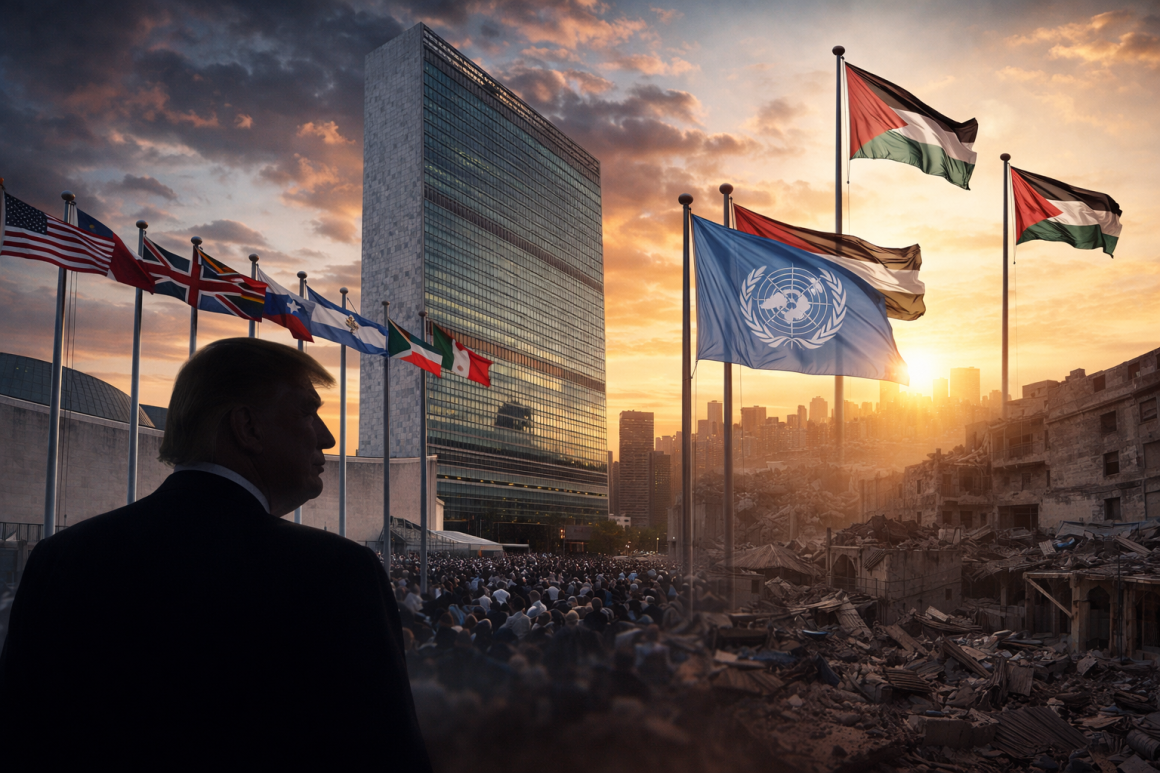
The praise bestowed on the UN by US President Donald Trump at the first meeting of the Board of Peace for Gaza, on 19 February 2026 in Washington, D.C., followed similarly positive remarks by US Secretary of State Marco Rubio at the Munich Security Conference on 14 February 2026. On both occasions, the UN’s potential was publicly acknowledged, although its poor performance was also highlighted. The argument goes that the US would much prefer the UN to prevent or solve conflict situations at an early stage through diplomacy, rather than the US having to intervene at a later stage to end the violence through the use of tariff threats or by military means of its own.
…but let’s not get carried away
Of course, there is an underlying assumption here that the UN would / should intervene in advance to push things in the direction that the US wants to see things moving. This is not a given, though, for those many cases for which the US is in the minority compared to the international community’s majority, as expressed by country votes and statements at the UN. Thus, the US would not necessarily be happy with UN initiatives regarding the Israeli-Palestinian conflict in Gaza and beyond, or the situation in Iran, or Venezuela, or Cuba, or the Russia-Ukraine war… Case in point, we see how the US has reacted to the International Criminal Court (ICC)’s arrest warrants against Israeli Prime Minister Benjamin Netanyahu and former Defence Minister Yoav Gallant. Instead of joining forces with others to ensure that Messrs Netanyahu and Gallant are brought before the ICC at The Hague, the US imposed sanctions on the Court itself, its judges and prosecutors.
The ICC is not a UN body, strictly speaking, although it is institutionally connected and working closely with the UN. Similarly negative reactions have come from the US regarding Gaza-related pronouncements by key UN bodies, like the UN General Assembly (UNGA) and the International Court of Justice (ICJ). At the same time, the fact that President Trump even mentioned at the Board of Peace inaugural meeting that the US would not allow the UN to go bankrupt – a fear / warning expressed by UN Secretary-General Antonio Guterres a few weeks earlier – and the actual payment of a small but symbolically important part of the US dues to the UN’s regular budget, indicate that there may be more to this positive US attitude than soothing rhetoric.
Explaining a potential US – UN rapprochement
Beyond the professed appreciation of the UN’s potential, what could be the real or additional reasons behind this public declaration of caring for the UN by the Trump Administration at its highest levels? And how does this square off with moves that undoubtedly undermine the UN’s agency or even try to phase the world body out? The Board of Peace is a case in point. It has been authorized by the UN Security Council (UNSC) to make arrangements towards achieving the objectives of the US-backed “Comprehensive Plan to End the Gaza Conflict”. The Board’s Charter, though, reveals its life-long Chairman’s – i.e. Mr. Trump’s – ambition to use the Board as a vehicle for dealing with conflicts around the world, largely replacing the UNSC and allowing for only one veto-power holder, namely the Chairman himself, as a person and not as representative of his country.
Maybe Chairman Trump sees that his Board is getting significant push-back from countries big and small. Russia and China have been taking their time to respond to the invitation and did not join the inaugural meeting in Washington, D.C., while India attended only as observer, as did several European Union countries and the European Commission, with only two EU countries actually joining the Board. Interestingly, Canada did not join although it was considering to, because it was disinvited by Mr. Trump himself due to his escalating feud with Prime Minister Carney. Moreover, the Board of Peace has received place- and time-limited authorization from the UNSC. It is mandated to deal with the situation in Gaza till the end of 2027. Therefore, the Board needs the continuing cover / legitimization / rubberstamping of the UN, so that in turn it can rubberstamp its Chairman’s decisions (apparently the way the Board will work, judging by its inaugural meeting) on Gaza and possibly beyond.
A further reason for the positive attitude towards the UN by President Trump and his Administration may be that a significant part of Americans, including a percentage of Republicans, still support the mandate and role of the UN. Interesting to note here, in view of Christian overtones often emitted by President Trump and his team, that the (US-origin) Pope refused to participate in or send a representative to the aforementioned Board of Peace meeting in Washington, D.C. One concern mentioned by the Vatican in that respect was that “at the international level it should above all be the UN that manages these crisis situations”. Open antagonism with the UN might have an impact on the US President, his team and his Republican Party’s fortunes in the upcoming mid-term elections and further ahead.
Reforming and revitalizing the UN for the long-term
Overall, it can be credibly argued that the US is making a turn or at least is holding its guns when it comes to the world body, and that is a good thing irrespective of what is causing it. This is no reason for complacency, though, far from that. The reprieve may prove to be very short, so it is advisable for the UN and its more reliable, long-term supporters to take quick steps to strengthen the institution’s defences. The ongoing efforts at UN reform are critical for achieving that. However, the “UN80 Initiative” initiated by Secretary-General Antonio Guterres tries to address the immediate threat of the US not paying its dues. It does not provide a clear vision of what a revived UN that is fit for the future should do.
Realizing the limited ambition of current UN reform efforts, a significant part of the UN-centred global civil society, as well as some member states and prominent individuals, have launched the Article 109 Coalition. They are fascinated by the possibilities that might open if Article 109 of the UN Charter was used to convene “[a] General Conference of the Members of the United Nations for the purpose of reviewing the [UN] Charter”. Even moving down this road, though, may be inadequate for what the UN needs in today’s particular juncture. Starting a broad discussion on the role of the UN and opening up the whole UN Charter for amendment may well lead to a renegotiation of every article and every word of it. In view of the increased geopolitical polarization and some strongly regressive views expressed by powerful actors, this may lead to a toning down of the Charter’s principles in terms of peaceful interstate relations, social progress, human rights and shared prosperity.
What is actually missing from the UN at the moment is not more endless debates but more action and delivery in all mandated areas of responsibility, namely peace and security, sustainable development, human rights and humanitarian affairs. For that to happen, what is immediately needed is proactive leadership at all levels. At the Secretariat level, it means mobilization of existing resources to deal with conflicts, speed up implementation of the Sustainable Development Goals (SDGs), protect human rights and address humanitarian situations preventively, effectively and objectively. This will become easier if the right person gets selected to succeed Antonio Guterres in the job of UN Secretary-General from 1 January 2027 onwards.
At the member state level, middle and smaller powers need to assert their agency and guide the organization through a few urgently needed reforms, most pressingly concerning the Security Council. The Council’s membership has to be expanded to become more representative, permanent membership abolished along with the veto power, re-election for several terms made possible thus allowing major countries an almost-permanent presence. While such reforms require UN Charter amendment, which will take time, changes in the working methods and understandings, including on the (non-)use of veto, and bringing in the General Assembly more systematically in case of a Council blockage, can make a big difference in terms of responsiveness already in the short term.
Finally, at the civil society and other non-state actor level, the need is urgent to refocus energies largely outside of New York and connect the UN to the people of the bigger world, instead of keeping the discussion within a small circle of connoisseurs and trying to play the corridor diplomacy game with member states. Can the UN-associated constituencies deliver on the above and secure the UN’s future and relevance against the moving sands of Trumpian, Putinian, Muskian and other big-interest and big-ego geopolitics and geoeconomics? It is a bet that the well-meaning, common-interest-motivated, state and non-state, collective and individual actors the world over need to win in the near future.

Dr Georgios Kostakos is Co-founder and Executive Director of the Brussels-based Foundation for Global Governance and Sustainability (FOGGS). He has been a UN staff member, including with the Executive Office of the UN Secretary-General, the High-level Panel on Global Sustainability, the UN Framework Convention on Climate Change (UNFCCC), and field missions for political affairs and human rights. He has also worked with think tanks, academic institutions and as a consultant on global governance and sustainability, peace and resilience.