For social and political change in Catalonia
![]()
By Sara Vilà Galan.
Our political stream combines different leftist parties, such as ICV, EUiA, Podem i Equo and many independents who come from a background of social struggle throughout Catalonia.
![]()
By Sara Vilà Galan.
Our political stream combines different leftist parties, such as ICV, EUiA, Podem i Equo and many independents who come from a background of social struggle throughout Catalonia.
![]()
By Pau Guix.
To talk about Catalonia today is, unfortunately, to talk about nationalism. And to talk about Catalan nationalism is to talk about manipulation, indoctrination and propaganda. Talking of nationalism is talking of feelings not reason, because there are no objective historical, economic or social arguments that could underpin this ideology. Talking of nationalism is talking about those who have taken their authority…
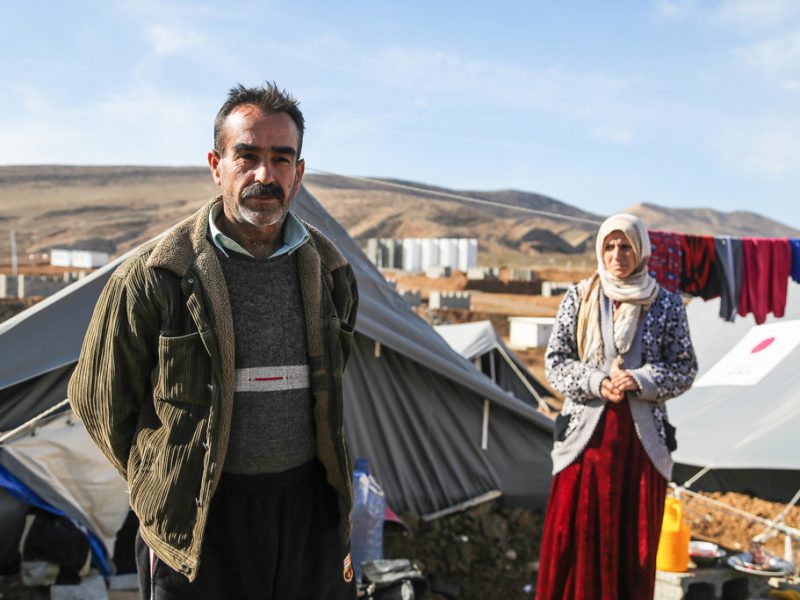
The current refugee crisis facing Europe has proven to be more than just a humanitarian tragedy; it has become a huge test for the EU’s capability in dealing with such crises.
![]()
By Oriol Martínez
The Catalonian process towards independence has come of age with the elections this Sunday. Given Madrid’s repeated prohibition over agreeing to a referendum, and even though these are official elections for the Catalonian parliament, they have been interpreted as a de facto plebiscite by a majority of players: the seven parties with a right to representation, the media, political circles in Madrid, and the international press.
![]()
By Juan Milián Querol
Feelings can be respected but not lies or manipulating reality. The spectre of populism has swept across Europe over these years of economic crisis, adapting in each region to its particular cultural background in order to identify an enemy and promise its own particular paradise. In some countries populism blames the European Union itself for all its ills; in others, immigrants; and in others, the southern regions. Some of that is happening now in Catalonia, where independence-based populism has kidnapped classic Catalanism (regenerationist, but not separatist) to make social suffering its electoral business.
The refugee crisis is holding up a mirror to the European Union which reflects a troubling image— an image that cannot be talked away by morality rhetoric. “The only thing necessary for the triumph of evil is for good men to do nothing,” famously claimed the Anglo-Irish statesman and philosopher Edmund Burke.
The Greek crisis has considerably widened the gap between the EU Member States and this is likely to continue. As was stressed after the bitter “commitment” on the morning of 13 July, only France and Italy, as well as Cyprus, strove to “save Greece”, preventing the “Grexit” which Germany and others, possibly fed up with endless European summits, more or less openly encouraged. The cracks are not, therefore, only “north-south” or “east-west”, but also dangerously affect the fundamental basis of the EU itself.
Europe and Germany cannot be an island of contentment, because cross-border crises do not simply disappear by building walls, looking away and failing to act.
![]()
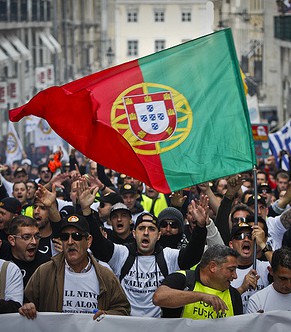
Ce lundi (7/09) les producteurs de lait étaient en colère et l’ont clairement démontré dans le quartier européen, à Bruxelles. Au même moment les ministres de l’Agriculture se réunissaient en conseil extraordinaire pour décider du futur de la production laitière européenne. Selon Véronique Lefolch, présidente de l’Organisation des Producteurs Laitiers, section laitière de la Coordination Rurale, vu les profits des industriels, le lait pourrait arriver quasiment gratuitement dans les supermarchés.
By Alicia Cebada Romero
The European Union (EU) has got it wrong in the Democratic Republic of Congo (DRC), and in the face of evidence that the police and the army continue to commit serious abuses and violations of human rights, it has decided to radically change its involvement to now implement reform of the country’s security sector.