
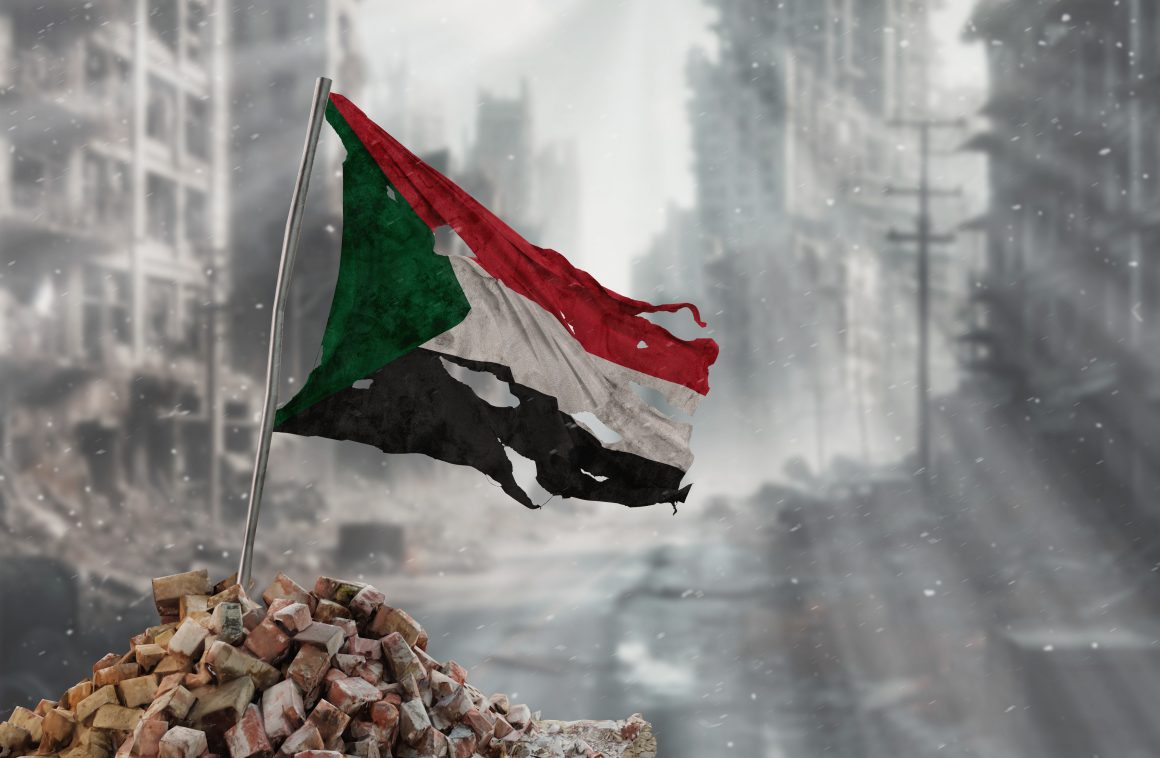
A conflict erupted in Sudan in April 2023 between the Sudanese National Army and the Rapid Support Forces (RSF) militia. The consequences have been catastrophic, with published figures showing thousands of deaths and millions of people forced from their homes since then. In fact, the United Nations considers the ongoing war in Sudan to be the worst humanitarian crisis of the 21st century.
Just recently, in November 2025, the Rapid Support Forces militia stormed El-Fasher – the largest city for refugees in Darfur – and in just a few days, thousands were killed based on their ethnic background. Women were raped on the streets; those who fled were not as lucky as they thought they were, merely moving from one hellscape to another, as they were targeted on their way out or forced to have their blood taken by militia members. But even before its tragic fall, El-Fasher had already been besieged, with its citizens enduring mass starvation, shelling and water denial for more than a year and a half.
In other areas of Sudan, the militia has escalated its violence with drone strikes on hospitals, airports and oil facilities. These are deliberate attacks on civilians and the critical infrastructure that sustains them. Such acts, which aim to advance the militia’s political agendas and interests, meet the legal and moral threshold of terrorism.
The European Union (EU) should move swiftly to designate the militia as a terrorist organisation and protect the lives of innocent Sudanese people.
The Rapid Support Forces originated mainly from the 2013 reorganisation of the infamous Janjaweed militia. It was established to assist government counterinsurgency efforts in Darfur and South Kordofan. The Sudanese parliament formally legitimised its operations through legislation in 2017. Throughout the conflict in Sudan, the RSF has been responsible for numerous atrocities, including village devastation, protester killings, sexual assaults, mass murders, illegal imprisonments, attacks on medical facilities and religious buildings, aggression toward media personnel and organisations, ethnically-motivated violence, and the use of child soldiers.
There are many actors involved in aiding this war: on the one hand, countries such as Turkey, Egypt, Saudi Arabia and Qatar are backing the Sudanese army, while on the other, the UAE is strongly supporting the RSF militia with weapons and money, in addition to leveraging its diplomatic and political arms in the West to continue arming the militia.
In order to address the issue of this complex war, the EU has, up to this point, mainly relied on the sanctions policy as leverage to deal with the RSF militia – for instance, most recently, after the atrocities in El-Fasher, the EU sanctioned the militia’s deputy leader. In January 2024, six RSF-affiliated companies were sanctioned by the EU, and then, in June 2024, top RSF leaders were also sanctioned. Despite all of this, the militia was not deterred and kept up its attacks on civilians.
The European Union, however, must go further and designate the Rapid Support Forces as a terrorist organisation. The militia’s systematic attacks on civilians meet the very criteria laid out in EU law: deliberate violence meant to terrorise communities, destabilise society and destroy essential infrastructure. As evidenced in recent weeks, the RSF militia has conducted drone strikes against various civilian infrastructure – such as power plants, civilian airports, and oil facilities, Telecom and internet networks and water dams – that serve the whole of the country.
An initial step has already been taken in this direction; the EU’s final resolution on the escalation of the war in Sudan called for triggering the procedure to evaluate whether the RSF should be included on the terrorist list. Parliament groups such as the Socialists and Democrats (S&D) group – the leading centre-left and the second-largest political group in the European Parliament, respectively – are already backing this designation of the militia. In an official press release, the S&D group called for the EU to assess whether the activities of the militia could meet the criteria for terrorist groups.
To mitigate any risk to civilians in areas controlled by the militia, the final designation framework should apply the EU humanitarian exceptions to all humanitarian actors, allowing them to engage with the designated entity without requiring prior authorisation.
There have also been many calls in other parts of the world to designate the militia. The US Congress, for example, is considering a proposal submitted by Senator Jim Risch, the head of the Foreign Relations Committee, requesting that the Department of State conduct an assessment to determine if the RSF militia meets the criteria for a foreign terrorist organisation. In November 2025, the Great Lakes Summit approved a recommendation to classify the militia as a terrorist organisation. And the Sudanese government has requested in several international forums that the militia be classified in these terms.
The EU designation step will undoubtedly be obstructed by the UAE, the militia’s main sponsor, which recently managed to lobby for the EU to remove its name from its final resolution. The EU is challenged here to abide by its principles and laws and to move forward with this crucial step to protect the millions and bring stability to Sudan and the entire region.
A formal EU designation would not only send a political message, but it would also sever the RSF’s financial lifelines by triggering asset freezes, curtailing access to international funding and imposing real constraints on its ability to sustain the war. The EU cannot afford to look away while a militia operates with impunity; it must use the tools at its disposal to stem the violence.
1 comment
14 April, 2026 @ 12:25 Ali
Totally agree with the article as one of the sudanese that have seen all crimes of RSF since day 1 of war and hope from the world to know that (Tagadum/Somod) are working as supporters to RSF agenda with the scenes that they are neutral seeking war stop.