

The United States and Israel’s war on Iran will undoubtedly have serious consequences for Russia –Tehran’s strategic partner – especially if the Islamic Republic falls. Still, the country expected to suffer the most if Washington achieves its geostrategic goals in the Middle East is not the Russian Federation, but China.
Russia – unable to achieve any of its objectives in Ukraine after four years of warfare – is widely considered the US’s major geopolitical adversary. In reality, however, Moscow’s debacle in Ukraine has clearly shown that the Russian military does not pose a serious threat to the United States – the world’s only superpower. Politically, as a result of Russian President Vladimir Putin’s decision to launch a full-scale war on Ukraine in February 2022, the Kremlin has lost much of its influence in the post-Soviet space. Furthermore, Moscow has proven to be an unreliable partner.
Even before the war in Ukraine erupted, Russia did nothing in 2020 to assist Armenia – its ally in the Collective Security Treaty Organization (CSTO) – during a conflict with Azerbaijan over Nagorno-Karabakh. Consequently, Yerevan suffered a defeat and has been actively distancing itself from Russia ever since, even threatening to withdraw from the CSTO.
In 2024, Russia turned a blind eye as Turkey-backed rebels overthrew its client, Bashar al-Assad, in Syria. Years of Moscow’s involvement in the Syrian Civil War, the money invested in Syria, and the lives of Russian soldiers lost seem to have been in vain. The country is now firmly within the geopolitical orbit of the US, Turkey and Israel.
But that is not the end of Russia’s geopolitical losses. In early 2026, the United States captured Venezuelan President Nicolás Maduro – who in December 2025 had called Putin his “older brother” – while the Russian leader “strongly supported President Maduro and efforts to protect sovereignty and peace in the Latin American region.” The Kremlin remained passive during US President Donald Trump’s “special military operation” in Caracas, allowing Venezuela to effectively fall into the United States’ geopolitical sphere of influence.
In Iran, Russia also did not take any steps to protect its key stronghold in the south – neither during the 12‑day war in June 2025 nor during the ongoing US–Israel military campaign. From a purely financial perspective, the Kremlin’s current approach makes perfect sense.
US and Israeli strikes on the Islamic Republic have forced Tehran to respond by hitting not only American military and civilian facilities in Gulf states, but also key energy infrastructure. As a result, oil and gas prices have risen significantly, and Russia, as a major producer, stands to benefit, at least in the short-term.
Despite US threats and sanctions, India has already resumed imports of Russian oil. Hungary, on the other hand, is pressuring Ukraine to reopen the crucial Druzhba pipeline in order to secure Russian oil supplies to Budapest. Other European nations might soon have to reconsider their sanctions policy on Moscow and resume oil and gas imports from the Russian Federation, especially if Azerbaijan becomes directly involved in the Iran war and is no longer able to supply significant volumes of natural gas to Europe.
Such an outcome would be beneficial for the Kremlin, especially given that energy has traditionally been a key driver of its foreign policy. A country that would almost certainly be seriously affected is China – Russia’s “no-limit partner.”
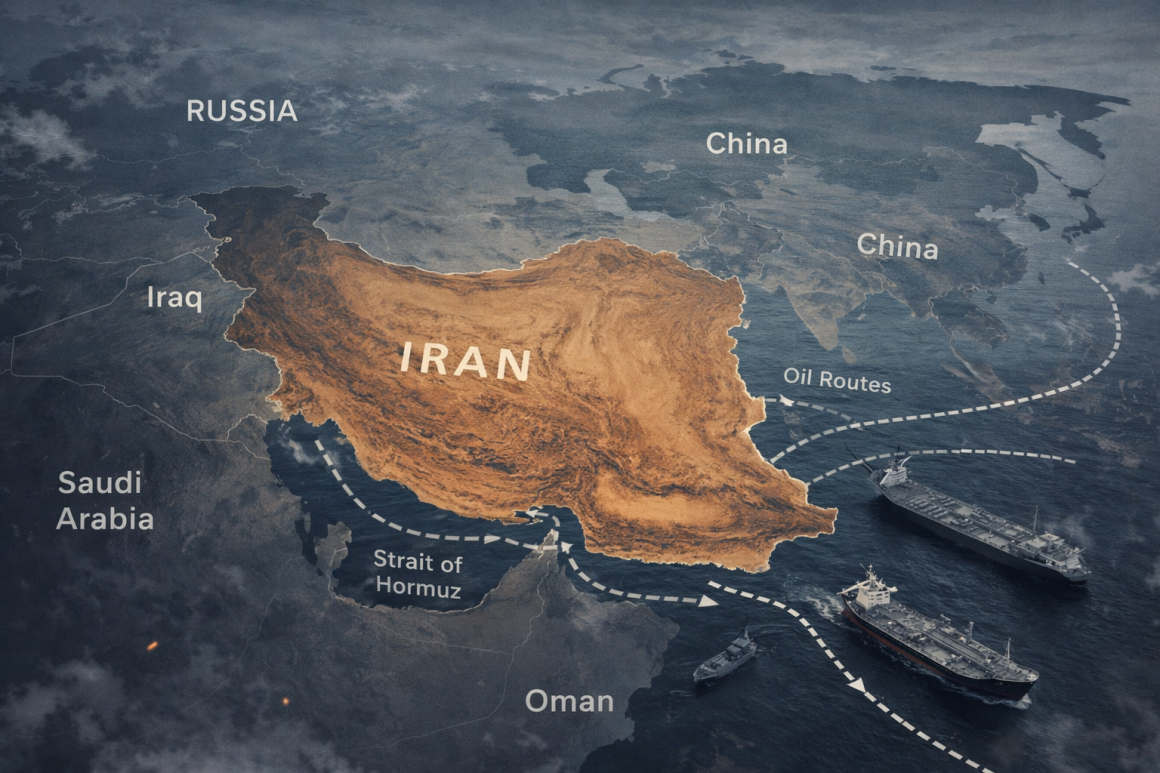
In 2025, more than half of China’s crude oil imports came from the Middle East – with around 13 percent of its total oil supply sourced from Iran – and most of that volume must transit the Strait of Hormuz. Iran’s effective closure of the vital maritime energy corridor is likely to hit hard not only China, but also several Southeast Asian nations.
In spite of that, Beijing does not seem interested in protecting the Islamic Republic against US and Israeli strikes. People’s Republic seems ready to cooperate with whichever government assumes control after the war, as long as oil flows remain secure and common economic interests are safeguarded.
The problem, however, is that the conflict could last longer than initially expected. Trump’s blitzkrieg operation has failed, as the killing of Iranian Supreme Leader Ayatollah Ali Khamenei did not lead to regime change in Tehran. Unless the United States and Israel manage to achieve their goals in the coming weeks – which does not seem very probable at this point – Trump’s “major combat operation” in Iran could easily turn into a Ukraine‑style, long war of attrition.
Given that, despite remarkable achievements in green energy transition, oil still plays an irreplaceable role in China’s economy, further disruption of oil supplies from the Middle East could affect the People’s Republic’s industrial and energy sectors. In parallel, it could lead to China’s overreliance on Russia, something Beijing likely wants to avoid, fully aware of the Kremlin’s flip-flops and unreliability.
China, therefore, currently faces limited strategic choices. A prolonged war will have an impact on its economy. But even if the US manages to force a regime change in Tehran in the near future, there are no guarantees that the new government will continue doing business as usual with Beijing.
Thus, navigating this situation will require great care – and it is anything but easy.