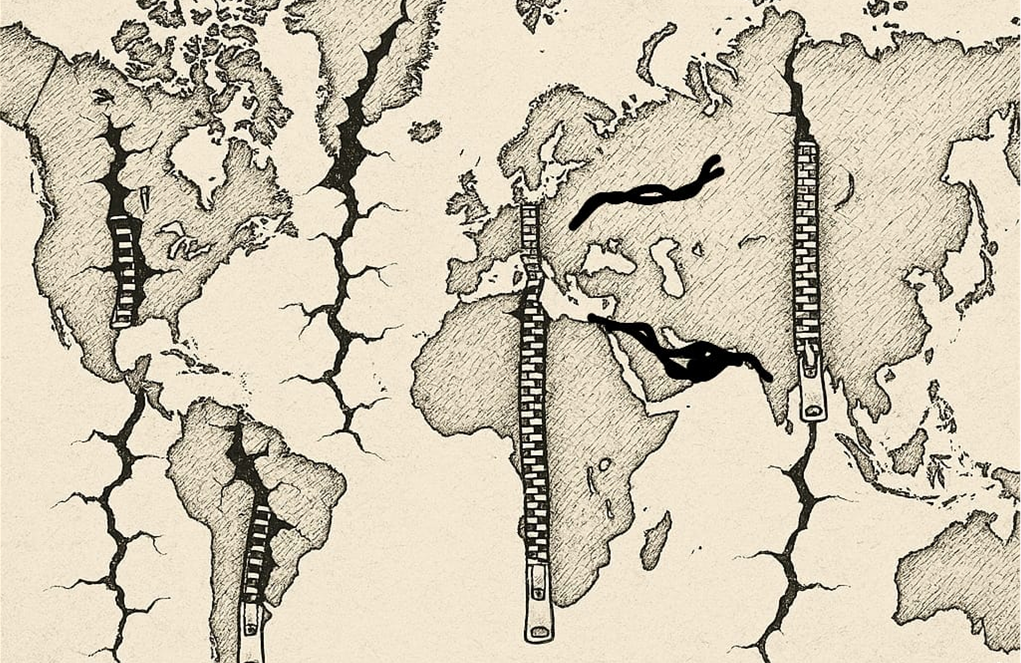

The international system appears to be entering a period of profound uncertainty. Geopolitical rivalry is intensifying, confidence in global institutions is weakening and rules that once appeared relatively settled are now being questioned with increasing frequency. In such an environment, the conversation about the role of so-called “middle powers” becomes more important than it might first appear.
The term itself is somewhat elusive. Middle powers are not global superpowers capable of reshaping the international system through sheer economic or military weight, but neither are they insignificant actors. Countries such as Brazil, India, South Africa, Germany, Canada, Indonesia and others possess meaningful economic capacity, extensive diplomatic networks and a substantial presence within multilateral institutions and therefore, their influence does not lie in domination, but in diplomacy.
Historically, middle powers have often played a quiet, but vital role in sustaining the multilateral order and they have acted as intermediaries, coalition builders and conveners of dialogue. They are rarely the architects of the international system, but they frequently help keep that system functioning.
Today, however, the environment in which they operate is changing rapidly.
Recent years have witnessed a series of geopolitical shocks, such as the Russian invasion of Ukraine, the escalating violence in Gaza following the Hamas attacks on Israel, and rising tensions involving Iran. Each crisis has exposed deep disagreements about how international law should be interpreted and applied, but more troubling still is the growing perception that powerful states increasingly reinterpret or bypass international norms when it suits their strategic interests.
Whether this perception is entirely fair is almost beside the point. In international politics, perceptions matter. When the rules of the system appear negotiable, confidence in the system itself begins to erode.
For middle powers this development poses a particularly serious dilemma, because unlike great powers, they depend heavily on stable rules and institutions for their security and prosperity, but they rarely possess the power to enforce those rules on their own. The result is a paradox: the states most dependent on a functioning rules-based order are often those least able to defend it unilaterally.
The question therefore arises whether middle powers might increasingly need to assume a more active role in safeguarding the norms that underpin international cooperation.
One way to understand this challenge is through the concept of strategic autonomy. Many middle powers find themselves economically or politically intertwined with larger powers, due to trade relationships, security partnerships and geographic realities often constrain their room for manoeuvre.
Canada offers a useful illustration. For decades its relationship with the United States has provided economic integration and security stability, butt recent political developments have encouraged Canadian policymakers to consider diversifying economic partnerships and deepening diplomatic engagement elsewhere. The goal is not to abandon existing relationships, but to reduce dependence on any single partner and thereby create a little more strategic space.
This instinct for diversification is increasingly visible across the middle-power landscape. Terms such as “non-alignment”, “selective alignment” and “active non-alignment” have re-entered diplomatic vocabulary. The language differs, but the underlying impulse is similar: middle powers seek flexibility in a world increasingly shaped by great-power rivalry.
But strategic autonomy cannot simply be declared; it must be built.
Domestic politics also complicates matters, in that foreign policy is never insulated from internal political dynamics. Electoral cycles, changes in leadership and domestic economic pressures frequently shape the extent to which governments are able to sustain international engagement. Brazil provides a striking example: Its global diplomatic posture has shifted significantly depending on whether leadership has emphasised multilateral cooperation or pursued a more inward-looking approach.
Despite these constraints, middle powers still possess meaningful diplomatic tools.
Their influence often lies in what might be described as diplomatic entrepreneurship, where, rather than forming rigid blocs, they can build flexible coalitions around specific issues, such as climate action, pandemic response or development cooperation, they can convene dialogue between states that might otherwise struggle to communicate and they can reinforce international norms even when larger powers appear hesitant to do so.
History offers a useful precedent in this regard, for example, the Bandung Conference of 1955 that brought together newly independent states from Asia and Africa to articulate principles of sovereignty, peaceful coexistence and mutual respect. The world today is very different from the era of decolonisation, but the underlying idea, that states can collectively reaffirm the principles of international cooperation remains relevant.
In a period when confidence in international norms appears to be weakening, a similar initiative led by middle powers could help reaffirm the legitimacy of international law and the principles embedded in the Charter of United Nations.
None of this implies that middle powers can reshape the global order on their own, because their room for manoeuvre remains constrained by structural realities. The institutions that govern global politics, including the United Nations itself, are often resistant to meaningful reform and even mechanisms, such as a UN Charter Review Conference, ultimately require the consent of the major powers to produce binding change.
Yet influence in international politics is not measured only by the ability to impose outcomes; it is also measured by the ability to sustain dialogue, maintain cooperation and prevent fragmentation.
Seen from this perspective, middle powers occupy a unique position in geopolitics since they are not themselves dominant powers. Because of this they often retain the diplomatic credibility needed to engage across geopolitical divides, they can speak to different sides of global disputes and they can maintain relationships that might otherwise become strained.
In an era increasingly defined by strategic rivalry, that bridging role of the middle-powers may become more valuable than ever, because whilst the future of the international system will not be determined by middle powers alone, neither should their contribution be underestimated. Their strength does not lie in coercion, but in the stewardship of the institutions, international norms and diplomatic practices that make international cooperation possible.
In a fragmenting world, that quiet form of leadership may yet prove indispensable.
*This is a summary of GSPN Open Consultation Monday, held on 8 December 2025. The full report can be accessed here