

State of the world: many not-so-beautiful games
The FIFA World Cup ended on 19 July with an apotheosis of the Spanish national team and a resounding boo for US President Trump. Whether one agrees or not with the appropriateness of these facts, there is a broader sense of a world caught up in an endless game being played on many parallel stages, from soccer fields to the Strait of Hormuz to cyberspace. Numerous analyses are being written daily on the state of our world and on the possible outcomes of these parallel games. This article attempts a somewhat different approach that is lighthearted on the surface but dead serious inside.
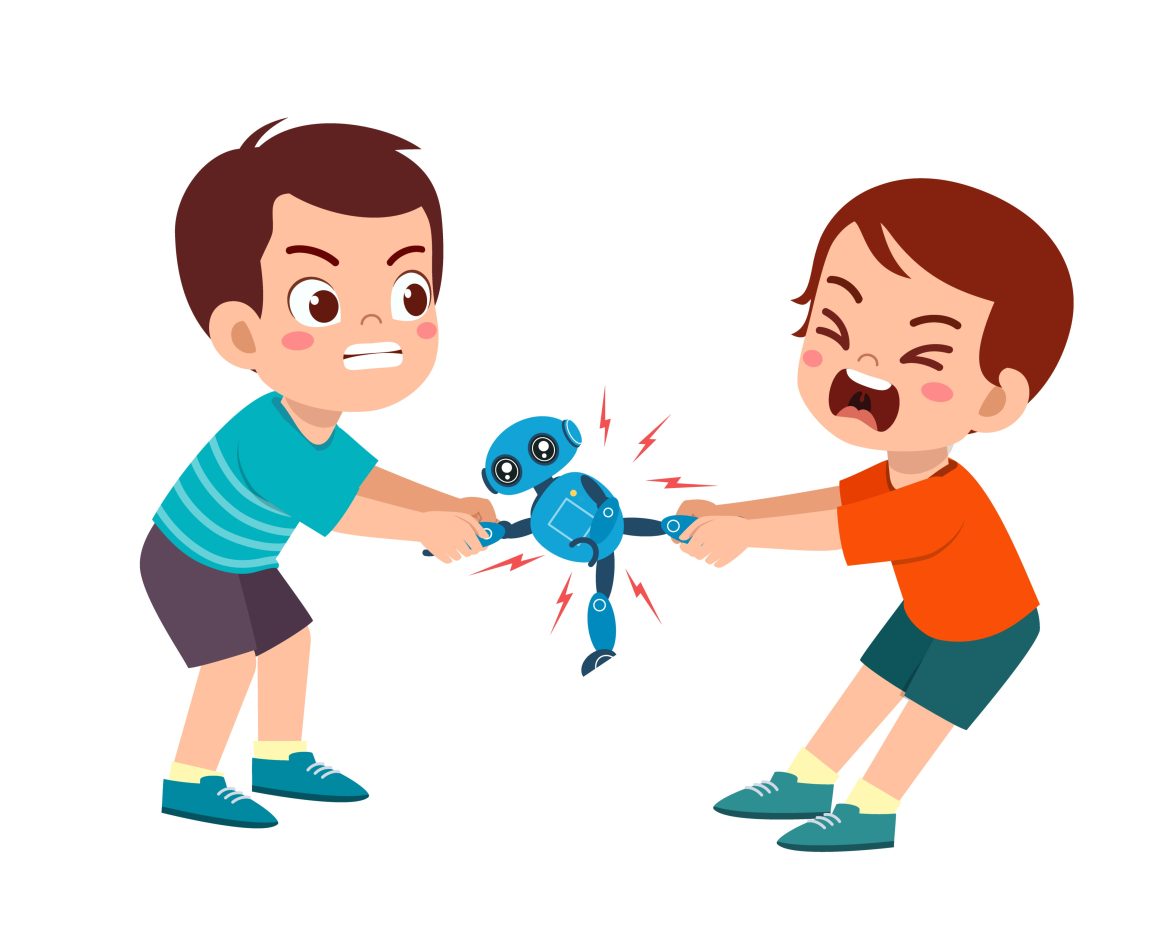
Behind passionate references to ages-old national interests and God-given rights, high principles and aggressive self-defence, uncompromising freedoms and new tech horizons, one can discern a number of little boys* – even if some of them look quite old – competing with each other for power, enrichment, a place in history and a place away from their internal torments. Unlike the rules that are generally known when it comes to football matches – well, with exceptions like the instant red card recall under Presidential influence – the little-boy competition has no rules other than what one can get away with, as we keep discovering.
The repercussions of this state of affairs are becoming clearer by the day. On the geopolitical stage, fronts new and old keep oozing blood and destruction, environmental pollution and economic disaster, from Ukraine and Russia to Israel and Gaza, Lebanon, Iran, Yemen, Afghanistan, Pakistan, Sudan, the Democratic Republic of Congo, Myanmar and more. Cuba, Venezuela, the South China Sea, are places pregnant with the promise of more trouble to come for the people, the economy, and the environment. The tens of billions of US dollars spent on confrontations past, present and future could have saved millions of people from disease and starvation, could have established better infrastructures for better lives for billions – but no, the little boys like high drama, and can enjoy it, along with the blood money a war economy makes, as long as the masses of spectators stay quiet, or worse, cheer them on.
On the technological stage, news keeps coming in about the latest AI models that break all barriers their creators impose on them and hack at will, for now into competing IT companies’ systems but soon into bank and military servers too. What will they do if they get such access, only their creators would know, or probably not even them, as we see from the surprised reactions and emergency announcements of companies like Anthropic and OpenAI. Still, no real pressure to institute powerful guardrails in the deployment of such technologies, to ensure that no war gets started or gets exacerbated, no autonomous targeting systems lead to the next human tragedy, even genocide, but also to guarantee social stability from the devastating impact on jobs, mindsets, privacy. Environmental stability is under great threat too, in view of the huge amounts of energy and water AI-enabling data centres need for their operation.
Little crimes of appeasement
The people seem to adore the gifted little boys, be they politicians or hi-tech gurus, because they have big ambitions and make big money, even if in the process they leave the ground strewn with bodies and rubble, bankrupt whole countries and certainly the middle classes, corrupt the minds of young and old, and promote their model of anti-social genius. No surprise that the vocabulary of democracy continues to be largely used, but oligarchic autocracy is increasingly becoming the state of play.
Are the masses ready to be sacrificed, so that exalted politicians and super-rich geniuses attain Homo Deus status? Can eight billion plus people accept that a handful of fellow Homo Sapiens are about to take full control of natural resources on Earth and beyond, and mess up with everybody’s future and mind through their populist rhetoric, AI machines and all kinds of media that they control? Welcome to the little boys’ universe – Utopia for them, Dystopia for you.
The parallel stages with their open fronts mentioned above are not the only ones around. More could be mentioned, like the domestic politics stage where, depending on the country, opposition figures are persecuted one way or another, economic oligarchs dictate policies that suit their interests, migrants are considered criminals by definition, women are not allowed to study or otherwise live the lives they want. The financial sector, a disembodied structure that cuts across national jurisdictions and handles transactions amounting to trillions of dollars at lightning speed, is another stage where games are being played. Value gets created from nothing in the stock exchanges, and shares rise or fall following announcements by politicians on war developments, or tariffs, or…, certainly not based on people’s real lives and the real/material economy. Religious leaders call from their stage for killing the enemy, grabbing his land and performing all kinds of vengeful acts. They conveniently forget that most if not all established religions claim legitimacy from their connection to the Divine that keeps the universe in harmony and should be reflected in harmonious human societies, without thefts or killings, with love, solidarity and respect.
Game(s) over, somehow?
Is there any chance that there are still adults in the room, or rather on this planet, who could mount a valiant defence of common good principles and practices, restoring the balance that has obviously been lost? Any hiding superheroes about to reveal themselves in their fancy capes and all?
Unfortunately, no sign of such creatures, but perhaps we are looking for the wrong kind of hero. What would be the nemesis for the little boys now playing their dangerous games uninhibited? For one, the modest “cockroaches” of the Cockroach Janta Party that is shaking the political establishment of India. Or the No Kings protesters in the US, the pro-Palestine protesters in the UK, the Hibakusha and their surviving stories in Japan. These are neither internally coherent nor cross-border organised movements, but seem to be rising out of the ashes of democratic states that have been turning autocratic and may have a chance to turn them back, for their domestic and the broader common good.
Protest movements and initiatives like the above offer hope, and a way out of powerlessness and depression. Protests wake up people and occasionally governments, ideally serving as midwives for what needs to actually come. For the longer term, though, fundamental transformation is needed for a new, better state of affairs to emerge and establish itself. At the core of such a transformation has to be the individual, the actual or future political leader, public servant, religious person, entrepreneur, and the average responsible citizen. An individual that exhibits modesty rather than narcissism, humanity rather than fake divinity, a focus on common good rather than own good – a Homo Moralis rather than an aspiring Homo Deus, and a Homo Solidarius rather than a Homo Neoliberalis (faux Latin terms used here to convey the intended meaning; the author bears no responsibility for the grammatical correctness, or lack thereof, of these terms).
The Homo Moralis specimen would be clear-minded and clear-worded, would have the self-discipline to turn their eyes away from the all-powerful screen and to shut their ears to the tempting songs of the oligarchic Sirens. They would be spiritual enough to feel the connection to something bigger than themselves, an integral part of humanity but also of nature and the universe, and secular enough to treat organised religion as the cultural amalgam, power-and-interests structure that it is. Such a person would not follow any leader of any kind uncritically but would trust their deeply felt sense of justice and purpose, in collaboration with like-minded others. They would be ready to stand up and cry “foul”, and “stop the carnage now”, or paint or sing all of this and more, rather than fall deeper and deeper into the mesmerizing eyes of self-serving “cobras”.
Corresponding lessons and traits could be drawn from individual characteristics for collective entities too, covering from local communities and community organisations to small business associations, schools, media of all kinds, and even small and middle-sized states. Organisations like the UN should exhibit such characteristics, corporately and through the behaviour of their individual leaders and staff – thinking clearly, rising to confront bullies and other irresponsible actors, working together for the common human and planetary good. A competent, brave and inspiring woman, if elected to replace outgoing Antonio Guterres as UN Secretary-General starting on 1 January 2027, could be the model for and show the way of putting an end to the little boys’ destructive games. One should not hold their breath till that happens, though, but should proceed to do their part irrespectively.

Dr Georgios Kostakos is Co-founder and Executive Director of the Brussels-based Foundation for Global Governance and Sustainability (FOGGS). He has been a UN staff member, including with the Executive Office of the UN Secretary-General, the High-level Panel on Global Sustainability, the UN Framework Convention on Climate Change (UNFCCC), and field missions for political affairs and human rights. He has also worked with think tanks, academic institutions and as a consultant on global governance and sustainability, peace and resilience.