

Introduction
Wars do not only destroy cities and human lives. They also test the institutions that claim to protect humanity. When political mechanisms appear unable to prevent suffering, people often search for other sources of hope and moral guidance.
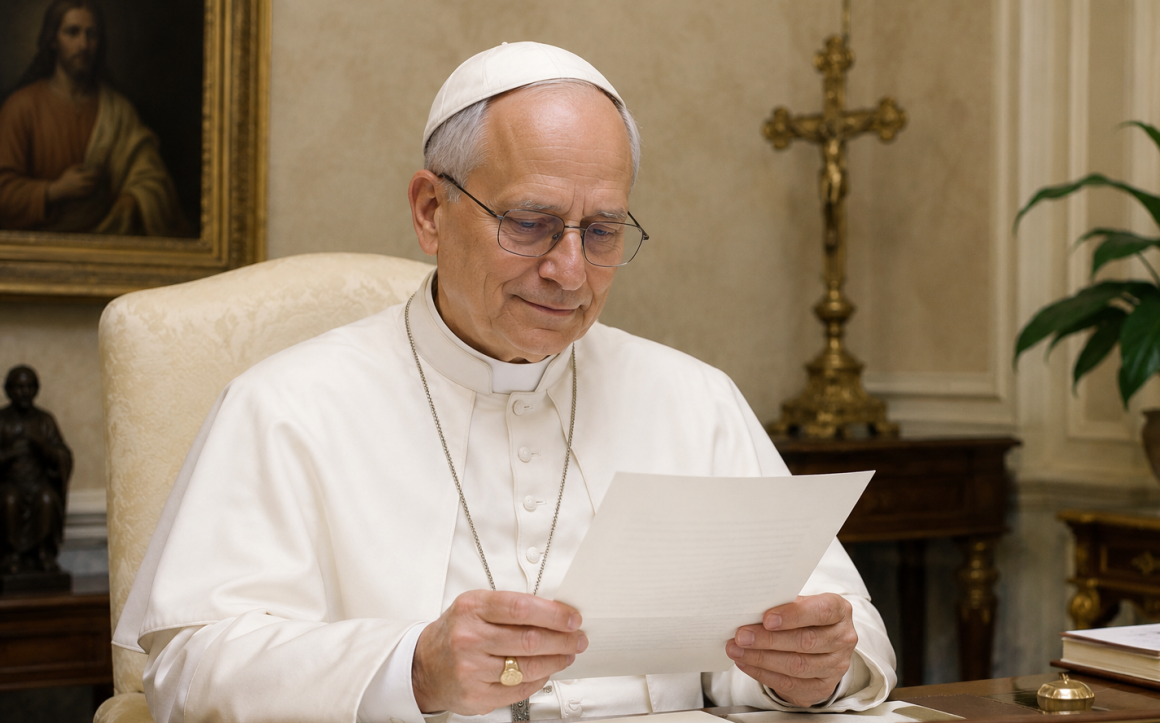
During the 2026 war between Iran, the United States and Israel, an unusual form of communication emerged. Iranian religious scholars, university professors, parliament members, and families of victims wrote letters to Pope Leo XIV, asking him to use his moral influence for peace and the protection of civilians.
These letters were not diplomatic negotiations. They were appeals to conscience. They raise a broader question: when political authority loses credibility, where do societies look for moral authority?
The search for a moral voice
In times of war, victims and concerned citizens usually turn first to international institutions, hoping that law and diplomacy will restrain violence and protect civilians. Yet during the 2026 conflict, many Iranian correspondents viewed the reaction of major international bodies as hesitant or insufficient.
The UN Security Council adopted Resolution 2817 (2026), but for some critics this reinforced the perception that international law was being applied unevenly. These critics noted that the resolution condemned only Iran’s actions while making no reference to the initial U.S. and Israeli strikes that triggered the escalation. Within this atmosphere of frustration and uncertainty, the Vatican emerged as an unexpected destination for appeals. Pope Leo XIV was not approached as a political leader capable of altering military realities, but as a moral voice whose words might still resonate across political and religious boundaries.
The diversity of the correspondents reflected this search for moral authority. Some letters came from religious scholars and academics, while others were written by public officials and representatives of religious minorities. In one case, the Health Commission of the Iranian Parliament wrote to Pope Leo XIV recalling the killing of 168 schoolchildren in the city of Minab and appealing for moral attention to the suffering of civilians. In another, Christian representatives in the Iranian Parliament expressed support for the Pope’s peace-oriented stance and condemned public insults directed at him.
These letters reveal a search for a moral language capable of acknowledging suffering and reaffirming the dignity of human life when political discourse seemed unable to do so.
Three stages of the letters
The letters sent to Pope Leo XIV between February and May 2026 can be understood in three main categories.
Appeals for moral intervention
The earliest letters were written mainly by religious scholars and academic figures, although some public officials also joined the correspondence.
Ayatollah Seyyed Mostafa Mohaghegh Damad, head of Islamic Studies at Iran’s Academy of Sciences, referred to shared ethical principles among religions and asked the Pope to remind political leaders of the teachings of Christ. Ayatollah Alireza Arafi, director of Iran’s seminaries, also wrote to Pope Leo XIV, emphasizing the suffering of civilians and the danger of normalizing attacks on religious figures. He asked the Pope to use his spiritual influence to awaken the conscience of the world.
These writers were not simply addressing a Catholic leader. They were addressing a moral tradition and asking it to speak according to its own principles.
The voice of the victims
The most emotional letter came from the families of students killed in the Minab school attack. The families wrote as parents who had lost their children, describing the painful reality of holding school bags and notebooks instead of their children.
The importance of this letter was not only what it said, but what it did not say. It did not appeal to political power. Instead, it appealed to human compassion. It showed that in moments of extreme suffering, personal grief can become a moral testimony.
From appeal to appreciation
After Pope Leo XIV publicly criticized the escalation of war and defended civilians, the tone of Iranian letters changed.
A joint letter by Iranian religious and academic figures expressed appreciation for the Pope’s position and described it as an example of moral responsibility in international affairs.
At this stage, the Pope was being recognized not only within Christianity but also among people from other religious backgrounds as a voice concerned with human suffering.
Pope Leo XIV and the defence of conscience
The significance of Pope Leo XIV’s interventions during the 2026 war did not lie in political power. Unlike governments or international organizations, the Vatican could not alter military realities. Yet many Iranian correspondents regarded the Pope’s words as important because they represented another form of influence: moral authority based on ethical responsibility rather than political interest.
Throughout the conflict, Pope Leo emphasized the human consequences of war and the duty to protect civilian life. During Palm Sunday Mass on 30 March 2026, he warned against invoking the name of God to justify violence and described Christ as the “King of Peace,” reminding believers that faith should never become an instrument of war.
A significant intervention also came during the Angelus prayer of 22 March 2026. Reflecting on conflicts affecting different regions, Pope Leo stated that “we cannot remain silent in the face of the suffering of so many people, innocent victims of these conflicts.” He argued that the suffering of civilians is not only a political issue but a moral wound affecting humanity as a whole.
The debate became more controversial when former US President Donald Trump used religious imagery while speaking about the conflict. For many Christians and Muslims, the use of symbols associated with Jesus Christ in a wartime context raised serious moral concerns.
Pope Leo’s response was not simply political. He insisted that religious language should not be used to legitimize violence. Speaking to journalists at Castel Gandolfo on 7 April 2026, the Pope described threats against Iran’s population and infrastructure as “truly unacceptable,” again emphasizing dialogue, restraint, and respect for human dignity.
For many Iranian letter writers, the importance of these statements was precisely that they appeared to move beyond political calculations. The Pope’s influence came not from power, but from the belief that moral witness still has a place in international affairs.
Religious dialogue and human solidarity
Another important aspect of these letters is their interreligious character. Although the writers came from a Muslim-majority society and addressed the leader of the Catholic Church, their message was not based on religious competition. Instead, they focused on values shared by many traditions: the protection of innocent life, rejection of hatred, and responsibility toward those who suffer.
These letters also suggest that religion can create channels of communication. The references to Jesus Christ were not merely symbolic; they were an attempt to speak through Christianity’s own ethical language and to appeal to the Pope’s understanding of Christ’s message of peace.
At the same time, Pope Leo XIV’s responses showed that moral concerns can cross religious and national boundaries. This does not mean religious institutions can replace governments or international organizations. Political institutions remain necessary. Rather, it shows that global affairs are shaped not only by states and formal structures, but also by communities of conscience.
Conclusion
The letters sent by Iranian religious leaders, academics, public figures, and families of victims to Pope Leo XIV offer more than a record of reactions to a particular war. They show how individuals and communities respond when political institutions are perceived as unable to address human suffering adequately.
What makes these letters significant is that people from different religious, social, and professional backgrounds turned to a moral authority outside their own political system and beyond their own religious tradition. They were not seeking military support or political advantage. They were seeking recognition of suffering, protection of human dignity, and a voice capable of speaking beyond the calculations of power.
For scholars of religion and international relations, this case illustrates how moral authority can continue to operate even when confidence in political authority declines. It also shows the growing role of religious and non-state actors in shaping global conversations about peace, justice, and human responsibility.
The story of these letters is therefore not only about Iran, the Vatican, or one conflict. It reflects a broader human reality: when institutions appear unable to respond, people continue to search for voices that defend dignity, compassion, and dialogue.