
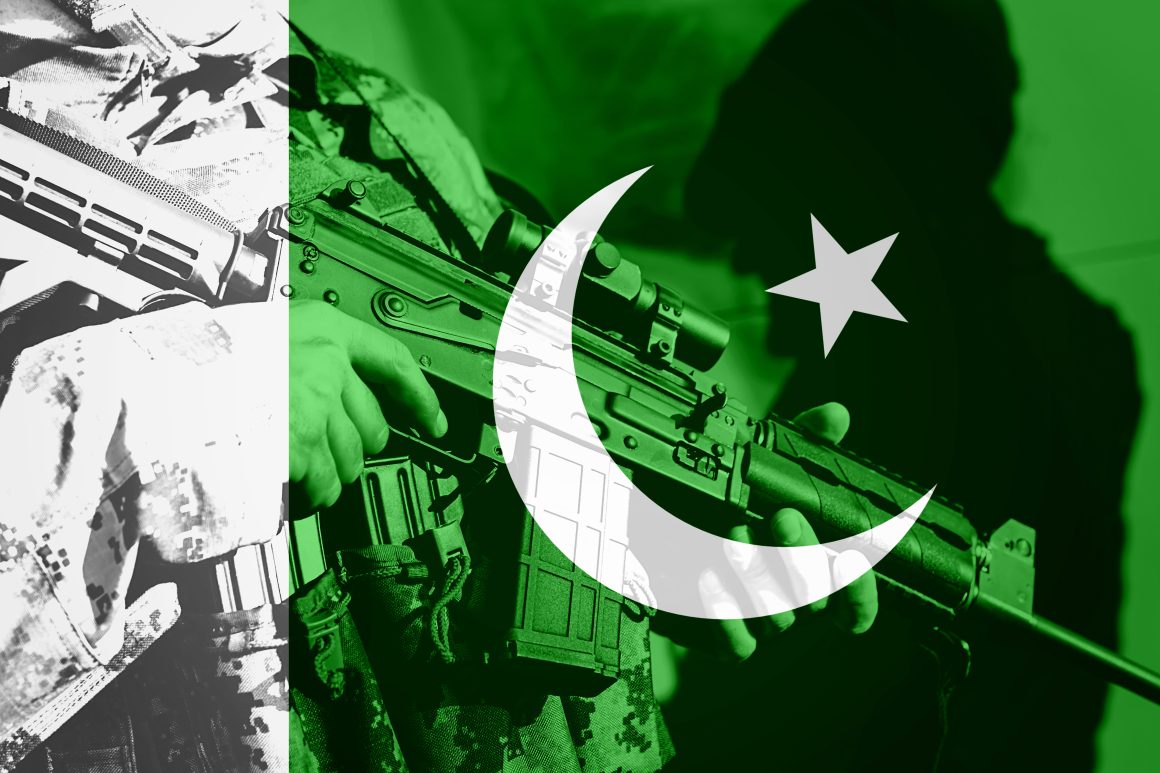

In 2025–2026, Pakistan’s economic crisis has begun to take on characteristics far deeper than those of a conventional fiscal collapse. Behind the negotiations for new bailout packages from the International Monetary Fund (IMF), a silent yet highly consequential institutional struggle is unfolding over the future direction of the country’s economic governance. State-owned enterprises, energy facilities, mines, ports, and banks are gradually becoming arenas of competition between two different approaches to economic management: on one side stands a centralized model that prioritizes speed, executive coordination, and rapid investment implementation, increasingly associated with the Pakistani military’s growing economic role; on the other stands the more institutional and rules-based framework promoted by the IMF through mechanisms of transparency, accountability, and political oversight.
At the center of this evolving dynamic lies the Special Investment Facilitation Council (SIFC), a mechanism created to accelerate foreign investment during a period of severe economic pressure. Officially, the SIFC is presented as a tool designed to reduce bureaucracy and facilitate investment procedures. In practice, however, it has evolved into a powerful economic instrument through which senior military officials have become increasingly involved in coordinating relations between the state and foreign investors. Through the SIFC, fast-track approvals, regulatory exemptions, and special investment privileges are granted in ways that often bypass the country’s traditional political and administrative institutions.
The origins of the SIFC date back to 2023, when Pakistan faced one of the most severe economic crises in its modern history. Foreign exchange reserves had fallen to critical levels, inflation was accelerating, debt obligations were mounting, and the country was once again negotiating financial assistance from international lenders. In response, Pakistan’s civilian and military leadership jointly established the SIFC as a centralized platform intended to streamline investment procedures, coordinate government agencies, and attract urgently needed foreign capital. Particular emphasis was placed on securing investment from China, Saudi Arabia, the United Arab Emirates, and other Gulf states. Supporters of the initiative argued that Pakistan could no longer afford lengthy bureaucratic delays and fragmented decision-making structures. Critics, however, viewed the creation of the SIFC as an important step toward the institutionalization of military influence in economic governance, given the prominent role assigned to senior military officials within the new framework.
The growing influence of the Pakistani military over economic management is not entirely new. Historically, the military has maintained a strong presence not only in security and foreign policy but also in critical sectors of the economy through military foundations, business conglomerates, and extensive networks of influence. Yet during 2025 and 2026, this influence appears to be entering a qualitatively different phase. The creation and strengthening of the SIFC marked the institutionalization of a more direct military role in the country’s economic governance, with senior military officials actively participating in the attraction, management, and acceleration of foreign investments.
This evolution intensified following the worsening economic crisis and the increasing inability of civilian governments to effectively manage fiscal pressure, inflation, and energy shortages. Within this environment, the military promoted the narrative that only a centralized and “disciplined” mechanism could ensure the rapid implementation of major investments and preserve economic stability. The SIFC was thus presented as a parallel structure of efficiency capable of bypassing bureaucratic inertia, political confrontation, and the administrative dysfunctions that have long characterized the Pakistani state. For many critics, however, this logic gradually reinforces a model of economic governance in which military influence expands far beyond its traditional role.
The significance of this process becomes even greater because of the geopolitical value of the economic networks and infrastructure involved in these agreements. China and the Gulf states have emerged as the principal investors behind many of the planned partnerships, strengthening their presence in sectors of strategic importance for Pakistan’s future economy. For Beijing, economic penetration into Pakistan is directly linked to the broader ambitions of the Belt and Road Initiative (BRI), while for the Gulf monarchies Pakistan represents a crucial geopolitical and economic partner in South Asia. Within this framework, the SIFC functions as a mechanism that enables faster foreign access to critical infrastructure and key sectors of the country through direct agreements and special investment arrangements.
Concerns intensified when a series of investment initiatives in sectors such as energy, logistics, mining, and infrastructure began advancing through special fast-track procedures under SIFC supervision. International analysts, along with segments of Pakistan’s opposition, argued that the growing use of military mechanisms in economic decision-making is creating a system of limited political accountability in which civilian institutions and parliamentary bodies play an increasingly marginal role. At the same time, transparency organizations and economic observers warned that concentrating such extensive managerial authority in unelected power centers increases the risk of opaque agreements and limits public oversight over the management of state resources and core economic mechanisms.
For the International Monetary Fund, however, the central issue is not the need to attract investments but the manner in which those investments are implemented. The IMF views military-controlled or military-influenced economic systems as lacking sufficient transparency, political oversight, and institutional accountability. Continuous bypassing of political institutions, special exemptions, and the concentration of economic authority in unelected centers of power raise serious concerns regarding the long-term sustainability of economic governance. From the IMF’s perspective, a state that repeatedly depends on international bailout packages cannot continue functioning through parallel and opaque mechanisms of authority without undermining its institutional stability.
It is important, however, to clarify the nature of the tension between the IMF and the Pakistani military. This relationship should not be understood as a direct or openly acknowledged confrontation. Rather, it reflects a deeper institutional disagreement regarding the principles of economic governance. The IMF does not explicitly challenge the military’s role in Pakistan’s political system; instead, it emphasizes transparency, parliamentary oversight, regulatory consistency, and institutional accountability as conditions for sustainable economic reform. The resulting friction therefore stems less from a direct political conflict and more from competing visions of how economic authority should be exercised, supervised, and legitimized within a state facing prolonged economic dependency.
The militarization of economic governance is also directly connected to the deeper crisis of trust surrounding Pakistan’s political institutions. For significant parts of the state apparatus, as well as for many international investors, the military often appears to be the only institution capable of providing continuity, stability, and security within an environment of political uncertainty. Yet this very logic creates a vicious cycle: the stronger the military’s economic role becomes, the weaker the civilian and institutional mechanisms capable of balancing power become in return.
Ultimately, the tension between the IMF’s governance requirements and the military-backed investment model is not solely about economics but about the future of the Pakistani state itself. On one side stands a model based on speed, centralized decision-making, and the management of economic crisis through highly coordinated structures. On the other stands the attempt to strengthen a more institutional and rules-based model of governance emphasizing transparency, accountability, and political oversight. The outcome of this struggle may determine not only Pakistan’s economic stability but also the way in which the country balances the need for immediate economic survival against the long-term necessity of institutional stability and state credibility.
Pakistan’s crisis is therefore no longer an isolated South Asian issue but part of a broader global realignment of power in which economic dependency, investments in critical infrastructure, and control over strategic economic networks are increasingly transformed into instruments of geopolitical influence. The debate surrounding the IMF, the military, and foreign investors reflects a much larger struggle between competing international models of economic and political organization: on one side, the Western institutional and rules-based model of governance, and on the other, more centralized approaches in which strategic investments are closely linked to state power, geopolitical influence, and the management of critical infrastructure.
Within this context, China’s growing presence in Pakistan acquires particular significance. Beijing no longer views Pakistan merely as an economic partner but as a critical geostrategic hub within the Belt and Road Initiative through which it seeks to expand its influence across trade corridors, energy infrastructure, and ports connecting Asia, the Middle East, and the Indian Ocean. The port of Gwadar, energy investments, and major transportation projects already form part of a much broader strategy of Chinese economic penetration into South Asia and beyond.
For Europe in particular, Pakistan represents a warning example of how economic weakness can gradually evolve into a crisis of political and institutional autonomy, especially in a world where investments, infrastructure, and debt are increasingly used as tools of geopolitical influence and strategic control. In recent years, the European Union has attempted to respond to the expansion of Chinese influence through the Global Gateway initiative, which seeks to finance strategic projects and transport networks based on European standards of transparency, institutional accountability, and sustainable development. At the same time, the growing Chinese presence through the Belt and Road Initiative, combined with the increasingly assertive role of regional powers such as Turkey, points to a new environment of geopolitical competition stretching from South Asia to the Eastern Mediterranean. Ankara has sought in recent years to expand its geoeconomic presence in Asian and Muslim markets through infrastructure networks, defense cooperation, and commercial partnerships, while simultaneously maintaining complex relations with both the West and Beijing.
Within this fluid geopolitical environment, Pakistan’s case acquires particular importance for the European Union because it demonstrates how economic crises can evolve into arenas of geopolitical realignment in which economic dependency becomes directly linked to political influence, control over strategic infrastructure, and shifts in regional balances of power.
The transition from economic dependency to limitations on political sovereignty rarely occurs through formal political concessions. Instead, it tends to emerge gradually through the interaction of external financial pressures and internal institutional adjustments. As economically vulnerable states become increasingly dependent on foreign investment, external financing, and international bailout mechanisms, strategic economic decisions become progressively shaped by the interests, expectations, and conditions imposed by external actors. Simultaneously, the need to secure investment and maintain economic stability often strengthens domestic institutions capable of implementing agreements quickly and efficiently, sometimes at the expense of traditional democratic oversight and civilian governance structures.
In Pakistan’s case, the growing importance of the SIFC illustrates how economic dependency can influence not only external relationships but also the internal distribution of power. The issue is therefore not simply one of foreign influence. Economic vulnerability can reshape domestic governance by empowering institutions that are perceived as more capable of managing strategic partnerships, attracting investment, and ensuring policy continuity. Over time, this process may narrow the range of autonomous policy choices available to elected governments, concentrate authority in unelected centers of power, and gradually reduce the ability of political institutions to independently determine national economic priorities.
Pakistan therefore functions as a warning example of how economic dependency can evolve beyond a purely financial condition and become a catalyst for broader transformations in governance, institutional balance, and political autonomy. And this is no longer a dilemma affecting only the fragile economies of South Asia, but one that increasingly concerns the future balance of power within the international system itself.