

The Question That Stayed With Me
Several years ago, I attended a dinner party, shrimp cocktail, chicken Kiev, and carrot cake, if memory serves. While chatting with the guests about this and that, I was asked by a particularly distinguished-looking man, “What would you really like to understand?”
I found the question intriguing. After giving it some thought, I answered, “What makes people do what they do?”
Within a Belgian context (full disclosure, I am Belgian, born in the USA), if I were asked the same question today, my answer would be more specific: Why are Belgian politicians so obsessed with criticizing Israel in general, and its war effort in particular?
My answer would be simple. The condemnation coming from politicians of all stripes, left, right, and centre, can be understood, at least in part, as a backhanded compliment to the Jewish state. They expect more from Israel. They know it is a democracy rooted in human values and shaped by the traditions of the Judeo-Christian world.
Democracies Are Held to Higher Standards
Belgian criticism of Israel is not necessarily evidence of unique hostility. It also reflects the expectation that democracies can and should be held to higher standards than dictatorships or terrorist organizations.
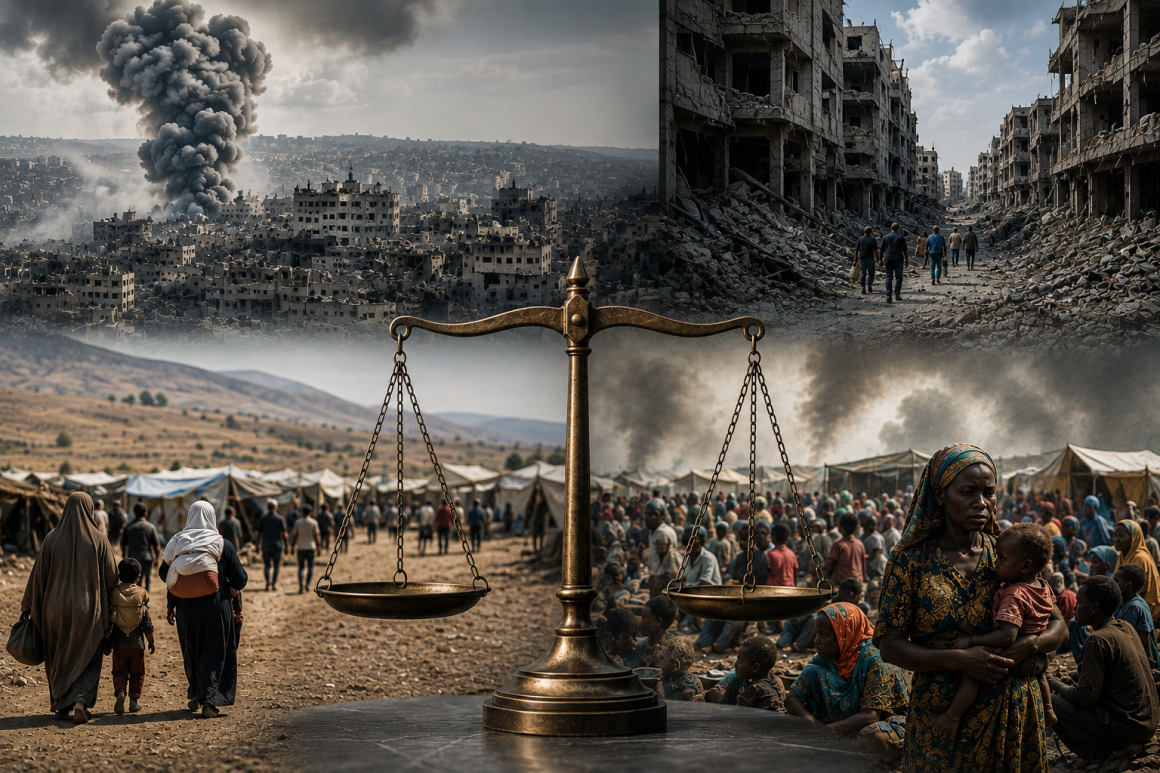
The problem is not that Israel is criticized. Democracies should be criticized when their policies or actions warrant it. The problem is the imbalance in the political attention devoted to Israel compared with comparable, or far worse, humanitarian catastrophes elsewhere.
The relative silence regarding other conflicts is not difficult to understand. Although they would never put it quite this way, many political leaders appear to recognize that nothing resembling Western democratic values can reasonably be expected from organizations such as the Houthis.
Why condemn the Houthis for their incessant warfare, which has contributed to one of the world’s worst humanitarian crises and famines? Such criticism, they may reason, is unlikely to change the behaviour of a movement that is fundamentally hostile to the values being invoked. Condemnation, in such circumstances, can seem futile.
The Congo’s Forgotten War
The same argument might be applied to the war in the Democratic Republic of the Congo. If there was ever an incomprehensible war, it is that one.
Belgium, which once colonized that vast country, might be expected to pay particular attention to events there. Yet the democratic traditions of the former colonial power are difficult to find in the Congo’s political environment. Decades of dictatorship, instability, and conflict have left the country struggling to establish durable democratic institutions.
Why condemn the countless warring factions? Despite the enormous number of lives lost in the conflict and its aftermath, the Belgian government appears to have largely given up trying to mediate or bring the various sides to the negotiating table.
The implication seems to be that little can be achieved.
Sudan’s Catastrophe
Another conflict that appears to have received comparatively little attention from Belgian officials is Sudan’s civil war, which began in April 2023. The conflict has produced famine and a catastrophic refugee crisis.
Sound familiar?
According to the BBC, more than 150,000 people have died in the conflict, while approximately 12 million have been forced from their homes in what the United Nations has described as the world’s largest humanitarian crisis.
Yet the Belgian government has not made Sudan a major political issue, nor has it campaigned with the same urgency for a ceasefire between the military factions fighting for power and wealth.
Why condemn the belligerent parties? There is, once again, the assumption that there is little Belgium can do to remedy the situation.
The Assumption That Some Countries Cannot Do Better
What connects these conflicts, and the relative silence surrounding them, is not merely a sense of helplessness. There is also, perhaps, a condescending assumption that certain countries and movements cannot reasonably be expected to live up to the standards applied to democratic societies.
This brings us back to Israel.
The criticism is, of course, not confined to Belgium. The anti-Israel anger also comes from an endless group of Spanish politicians, led by the Prime Minister Pedro Sànchez, who has been relentless in his criticism. Sànchez has used strong language about civilian deaths, international humanitarian law and has been one of the national leaders pressing for stronger EU measures, such as whether to maintain a strategic partnership with Israel.
To be fair, some European officials have tried to call for reason to prevail. For instance, the former EU Commissioner for Crisis Management, Janez Lenarčič, called for an end to “indiscriminate killing of civilians and damaged civilian infrastructure,” referring to attacks by the Houthis and retaliatory air strikes by the Saudi‑led coalition. Yet, such grumbles barely count as throat clearing.
A Consistent Moral Standard
While anti-Israel activists lead the Belgian government’s vocal criticism of Israel’s policies in Gaza and Judea and Samaria, their criticism may inadvertently reveal something about the standards they expect Israel to meet.
Israel is not exempt from criticism. Nor should it be. A democracy that claims to value human life and individual dignity must be willing to respond to difficult questions and accept criticism.
But the very fact that Israel is expected to answer questions about its conduct, particularly during wartime, may also reflect an underlying recognition of its democratic character. The expectation is that Israel can do better because it is presumed to possess the institutions, values, and moral framework that make doing better possible.
That is not a defence of every Israeli policy, nor is it an excuse for every action taken by the Israeli government or military. It is simply an observation about the standards being applied.
Perhaps, then, the most revealing aspect of the relentless criticism of Israel is a paradox. The critics may believe they are demonstrating only disapproval. But by demanding from Israel what they do not demand from dictatorships, terrorist organizations, or the warring factions of failed states, they may also be acknowledging, however reluctantly, that Israel is different.
The challenge is to apply that principle consistently.
Israel should be held accountable for its actions. So should everyone else. The same moral standards should apply to all.